

 Tina Aspiala
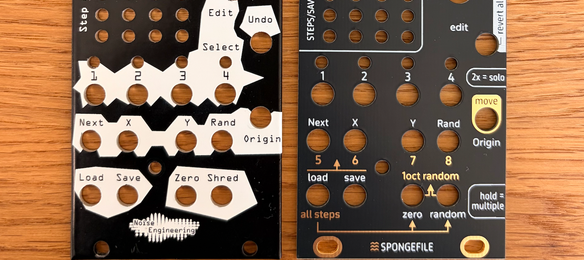
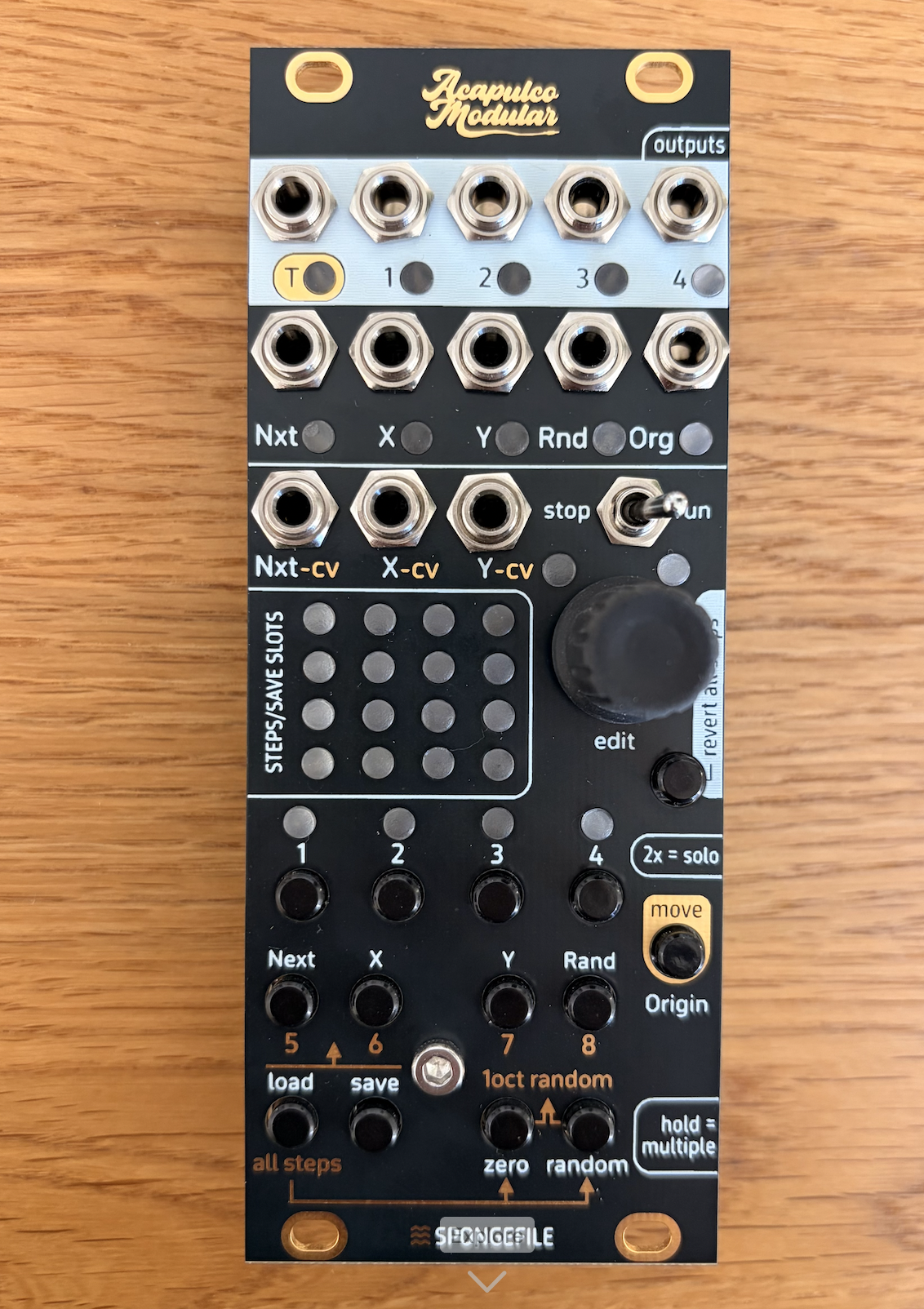
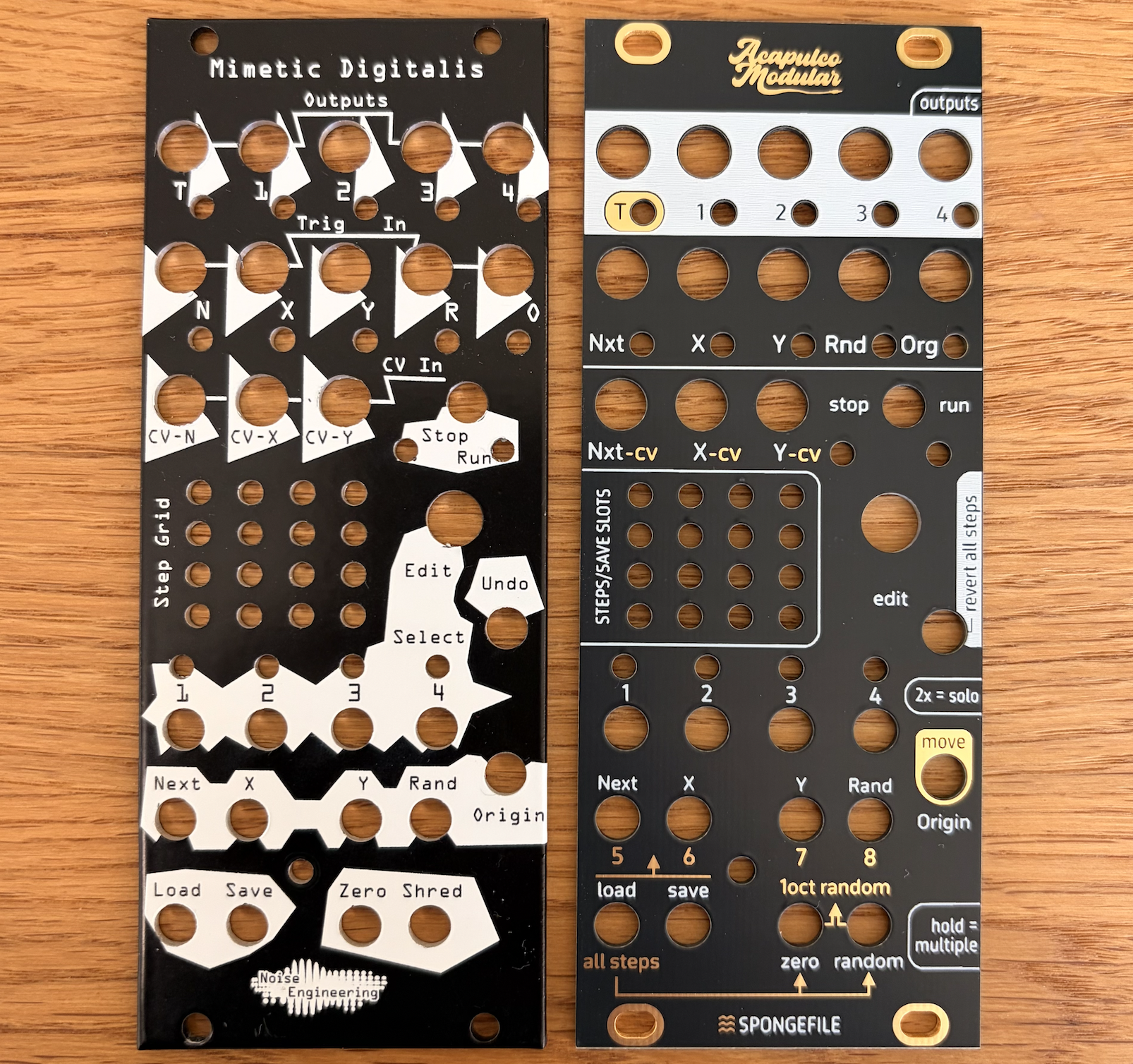
Redesigned Mimetic Digitalis panel, available in the Spongefile shop
Six years ago, I made this Mimetic Digitalis cheat sheet. This was a module that seemed to have such promise, but also felt like it had secrets it was hiding and forcing you to memorize, which is my least favorite thing in UI.
But first, let's cover
What Mimetic Digitalis is and does
See that grid of 4 x 4 LEDs? That's your pattern grid, just like in René.
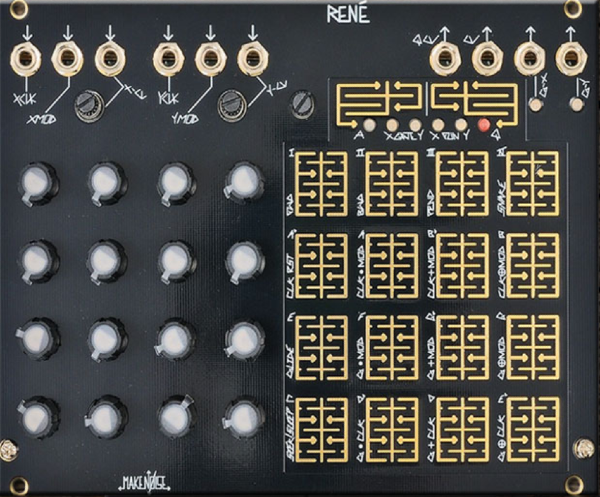
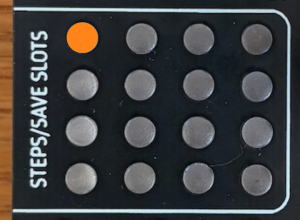
When the first LED is lit, each of the four CV outputs sends out its own fixed voltage on that step. (Did I mention these can be quantized? If you push and rotate the encoder as you edit, the voltage goes up chromatically.) You can think of them like four simultaneous tracks, that all change to their next voltage in the same clock tick.
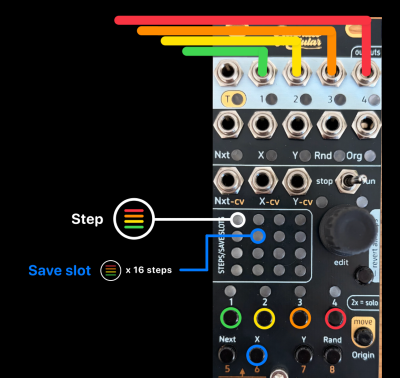
You can of course use these for more than just melodies. Think of them as a good pairing with any CV controlled thing that plays nice with step voltage. Make a bunch CV controlled functions switch simultaneously between very carefully dialed-in positions, for example. Or make chords with multiple oscillators.
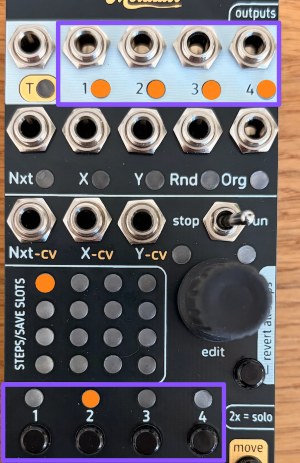
Each step contains four different voltages, one for each output. This means the other LEDs in the grid can contain four entirely different voltages. HOWEVER! They cannot be triggered separately. As one step moves to the next, the set of four is all triggered at the same time.
The fun begins when you start traversing this grid in various ways with either triggers or CV.
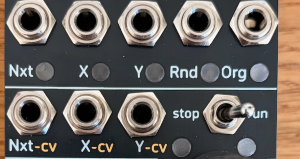
Next goes through each step one by one, left to right, top to bottom, like reading a paragraph.
X goes left to right on whatever row it's on, but does not go up or down.
Y goes up to down on whatever it's on, but does not go left to right.
Rnd jumps around randomly.
Org takes you back to the origin step starting point in the top left corner.
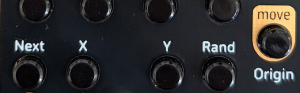
By combining these, you can get a lot of interesting variations on what is otherwise a standard 16 step sequence. By alternating x and y triggers you can go diagonally, for example. The thing to keep in mind is that CV and triggers only control which step you're on, not the four voltages that come out. Those are programmed into a step with the encoder.
Now let's look at the button combos:
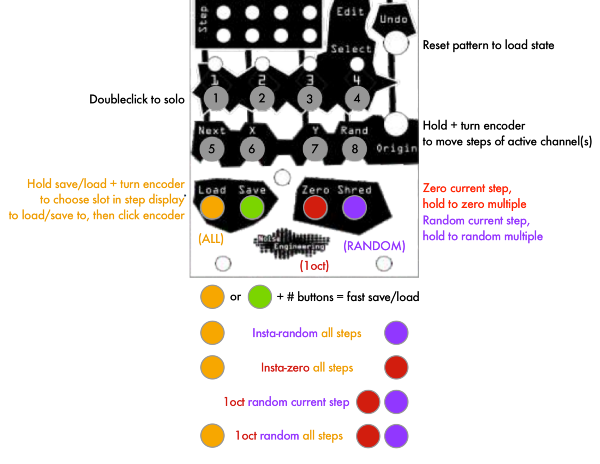
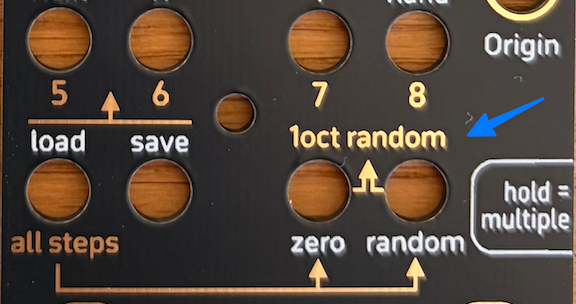
Mimetic Digitalis lets you very quickly try out random patterns or clear everything, or generate random patterns within a 1 oct bracket. You just need to remember what to press.
The second overlooked feature is the ability to quick load saved patterns. Because each of those 16 LEDs is also a slot you can save a 16 step sequence in (of 4 voltages per step)
You can reach all 16 slots with the encoder (Hold the load or save button and turn the encoder to choose any of the 16), but you can also quick access any slots in the top two rows by holding load/save and tapping buttons 1-8.
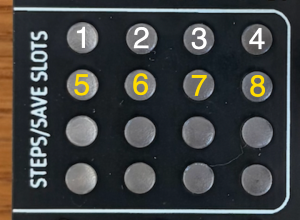
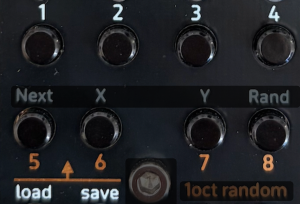
This is of course really nice to have in a live performance setting.
Finally, one quirk to keep in mind:
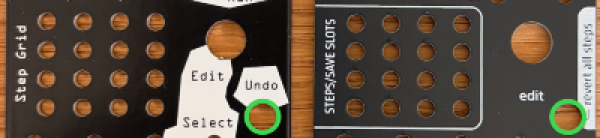
What about the Mimetic Digitwolis?
Noise Engineering has retired the Mimetic Digitalis and replaced it with the Mimetic Digitwolis, which has MIDI in/out and a digital screen.
I would argue, however, that the new screen is not for everyone. There is a certain clarity in the LEDs that you can see at a distance (without glasses, for those of us at that age) and in a module that has a few clear functions instead of a dozen potential functions to set up. Also now that it has a successor, there are plenty available at a decent price on the used market.